
build real confidence.
have better Conversations.
create meaningful ConnectionS.
If you overthink what to say, struggle to start conversations, or feel awkward meeting new people, you're not alone.
Confident Social Skills helps you develop the mindset and practical skills to feel more comfortable in conversations, connect naturally with others, and build real relationships in your work, social life, and everyday interactions.
Real confidence doesn't come from memorizing scripts.
It comes from learning to trust yourself in conversations.
Build real confidence in everyday actions
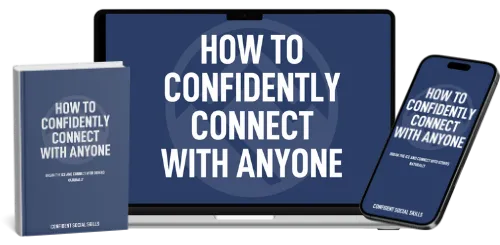
How to Confidently Connect With Anyone
If you've every overthought what to say, hesitated before starting a conversation, or wondered how you're coming across to others, you're not alone. This free guide will show you a simple practical way to start conversations more naturally and begin building real confidence in you everyday interactions.
Inside you'll learn:
Why starting conversations feels difficult (and why it's more common than you think)
The biggest myth about confidence that keeps people stuck
Three simple ways to start conversations with almost anyone
How to keep a conversation going without overthinking what to say
The most common conversation mistakes people make
A simple practice challenge to help you start building confidence immediately
Get the Free Guide Instantly
Enter your email to receive the PDF.
does this sound familiar?
Many People Struggle Socially In Ways They Rarely Talk About
Many people want to feel more confident socially but find themselves overthinking conversations, holding back what they really want to say, or worrying about how they come across. These experiences are more common than you might think—and they can quietly prevent the kinds of connections and relationships people truly want.
You might recognize yourself in some of these:

not knowing what to say
You want to connect with people and have meaningful conversations, but sometimes you feel stuck or unsure how to start. Instead of enjoying the moment, you find yourself searching for the right words.

Overthinking conversations
You replay conversations in your head, wondering if you said the wrong thing or came across the wrong way. That constant second-guessing can make social situations feel exhausting.

fear of rejection
You hold yourself back from introducing yourself, speaking up, or asking for what you want because you’re worried about how others might respond. That hesitation quietly limits opportunities for connection.

people pleasing
You say yes when you really want to say no or prioritize keeping the peace over expressing what you actually think. Over time, it becomes harder to feel authentic in your relationships.

not BEING YOURSELF
Around others, you sometimes feel like you’re filtering or editing who you are instead of fully being yourself. That gap between how you show up and who you really are can make connection feel distant.

struggling to make
friends
You want deeper friendships and a stronger sense of community, but building those connections doesn’t always feel straightforward. Meeting new people or turning acquaintances into real friendships can feel unclear or uncomfortable.
Many people experience these patterns for years and eventually start to believe that this is simply who they are—that they’re just not naturally confident, social, or good with people.
But that conclusion isn’t the truth.
THE CORE BELIEF
Confidence and Connection Are Skills You Can LEARN
Most advice about confidence focuses on techniques — scripts, clever lines, or tricks to appear confident. But real confidence doesn’t come from memorizing the perfect thing to say. It comes from learning to trust yourself in conversations.
When you trust yourself socially, conversations become easier. You stop analyzing every word, worrying about how you come across, or trying to perform. Instead, you can relax, be present, and connect naturally with the people around you.
what becomes possible
When your confidence grows and your social skills improve ...
EVERYTHING starts to change.
When you stop overthinking conversations and learn the skills to communicate naturally, you begin showing up differently in every area of your life. Relationships become easier, opportunities open up, and connecting with others starts to feel natural instead of stressful.

social life
Start conversations more easily, meet new people with less anxiety, and build friendships that feel natural and genuine.
Start conversations easily
Connect naturally without forcing conversations
Build friendships that feel real

dating & relationships
Express interest, flirt, and connect authentically so relationships develop naturally instead of feeling forced.
Express interest without anxiety
Flirt and connect naturally
Build relationships based on authenticity

work & Career
Speak up in meetings, share your ideas confidently, and stop second-guessing yourself in professional conversations.
Speak up in meetings
Share ideas without second-guessing
Build stronger professional relationships
the approach
How You Build Real Confidence and Social Skills
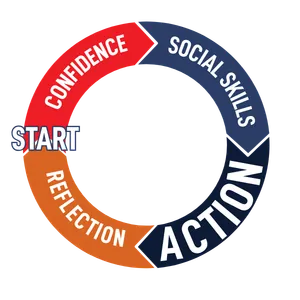
The Social Confidence Cycle
Confidence isn’t something you suddenly gain one day. It grows through a repeating cycle. As you build confidence in yourself, develop practical social skills, and take action in real conversations, you begin to see real growth. That growth strengthens your confidence, making the next conversation even easier.
Over time, this cycle creates lasting change in how you show up socially.

CONFIDENCE
Start by building self-trust in social situations.
Confidence doesn’t mean feeling fearless. It means trusting yourself to show up, speak, and engage even when you feel uncertain.

SOCIAL SKILLS
Learn the principles that make conversations flow naturally.
Communication, listening, body language, and emotional awareness help you connect without relying on scripts or gimmicks.

ACTION
Take real social risks in everyday life.
Confidence grows through experience. Conversations, introductions, and social opportunities are where your skills turn into real confidence.

REFLECTION
Turn every interaction into learning.
By reflecting on what worked and what didn’t, you strengthen your confidence and continuously improve how you show up socially.
WORK WITH ME
Build Real Confidence & Social Skills with Guided Coaching
If you want to build real confidence and social skills, understanding the cycle is only the beginning. The real transformation happens when you apply these principles in your everyday social life with guidance, feedback, and structured challenges.
That’s exactly what the Confidence Social Skills coaching program is designed to help you do.
Confidence & Social Skills Coaching
Build real confidence through personalized coaching and real-world social practice.
Develop natural conversation skills, overcome social anxiety, and show up with confidence in everyday interactions.
Inside coaching you’ll learn how to:
Build self-trust in social situations
Learn practical conversation and connection skills
Take real social action between sessions
Reflect and improve after real interactions
Private 1-on-1 Coaching Program
Limited coaching spots available
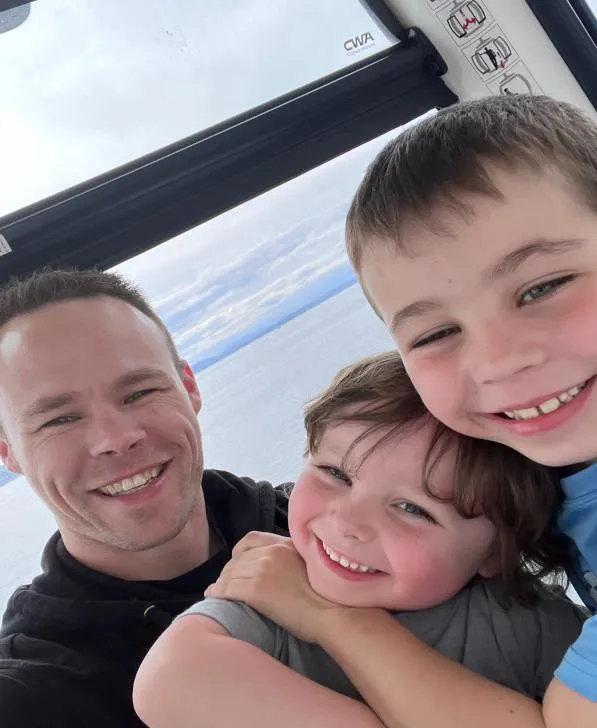
i know this feeling
I Lived this too
For a long time, I didn’t feel fully comfortable being myself around other people. I was always aware of how I came across—what I said, how it might be received, and whether I was saying the “right” thing. From the outside, I could seem confident or capable, but internally there was always a layer of hesitation, like I was holding parts of myself back.
I became really good at fitting in. I knew how to read the room, avoid conflict, and keep things smooth—but that often meant filtering what I said and overthinking conversations afterward. I wanted deeper connection and stronger friendships, but I didn’t always know how to create them in a natural way.
Over time I discovered something important: confidence isn’t something you’re born with—it’s something you build. Through personal work, coaching training, and years of real-world social practice, I learned how to close the gap between who I was internally and how I showed up around others. Today, I help people build that same confidence and social skill so they can show up naturally in conversations and relationships.
And the results people experience through this work are powerful.
REAL RESULTs
What People Experience Through Coaching
When people begin building confidence and social skills through real-world action and reflection, meaningful changes start to happen. Conversations feel easier, self-trust grows, and relationships deepen. Here are a few experiences from people who have done this work.
ReadY to start?
Ready to Build Real Confidence and Social Skills?
If you’re ready to stop overthinking conversations and start showing up with confidence, coaching can help you build the skills and momentum to change how you show up socially.
Schedule a discovery call to see if coaching is the right next step for you.
Limited coaching spots available
Frequently Asked Questions
Find Answers to Empower Your Journey with Confident Social Skills
Who is this for?
This is for people who want to feel more comfortable and confident around others. Many people who come here struggle with social anxiety, overthinking conversations, people-pleasing, or self-doubt. Some want to make friends more easily, feel more confident at work, improve dating, or simply feel more like themselves when talking to others.
If you’ve ever felt like you hold back in conversations or wish social situations felt easier, you’re in the right place.
What if I’m extremely shy or have social anxiety?
That’s actually very common. Many people who work on social confidence feel anxious in conversations, overthink what they say, or worry about being judged.
The goal isn’t to force yourself to become an extrovert. Instead, we focus on building confidence step by step so you can feel more comfortable being yourself around other people.
What kinds of things can coaching help with?
People often come to work on things like:
• Social anxiety and overthinking conversations
• Feeling awkward when meeting new people
• Difficulty starting or maintaining conversations
• People-pleasing and difficulty setting boundaries
• Low self-confidence or self-doubt in social situations
• Wanting stronger friendships or relationships
• Feeling more confident at work or networking
The work usually involves both internal confidence and practical social skills.
What happens during a Discovery call?
A discovery call is a relaxed conversation where we talk about what you’re currently experiencing and what you’d like to change.
We’ll explore where you feel stuck socially, what situations feel challenging, and what you’d like your confidence to look like moving forward. If coaching feels like a good fit, we can talk about what that might look like.
There’s no pressure and no obligation.
Do I need to be naturally outgoing for this to work?
Not at all. Confidence in conversations isn’t about personality type. Many naturally quiet or introverted people develop strong social confidence once they learn how to trust themselves and stop overthinking every interaction.
The goal isn’t to become someone else. It’s to become more comfortable being yourself.
Do you offer therapy?
No. This is coaching, not therapy.
Coaching focuses on helping you move forward, build confidence, and develop practical skills for real-life situations. Many people who work on social confidence benefit from both therapy and coaching, but the approach here is focused on growth, action, and real-world practice.
How long does it take to build confidence?
Confidence usually grows gradually through experience and practice.
Many people start noticing shifts fairly quickly once they begin taking small actions and changing the way they relate to social situations. Long-term confidence tends to develop through consistent practice, new experiences, and building trust in yourself over time.
Will I have to do uncomfortable things?
Growth often involves stepping slightly outside your comfort zone, but the process is always collaborative and paced appropriately.
The goal isn’t to overwhelm you, but to help you build confidence through small, manageable steps that expand your comfort zone over time.
What if I’ve tried to work on my confidence before and it didn’t help?
That’s very common.
Many people try things like reading advice online, watching videos, or pushing themselves into social situations without really addressing the deeper patterns that keep them stuck.
Working through confidence with guidance and support can make the process much clearer and more effective.
What results do people usually experience?
People often report things like:
• Feeling less anxious in conversations
• Overthinking less after interactions
• Speaking up more naturally
• Feeling more comfortable meeting new people
• Building stronger friendships and relationships
• Feeling more like themselves socially
The biggest shift many people experience is developing a sense of self-trust in social situations.
Do I have to be local to work with you?
No. Coaching sessions are held online, so you can participate from anywhere.
How do I get started?
The easiest way to begin is by booking a free discovery call. We’ll talk about where you’re currently feeling stuck socially and what kind of progress you’d like to make.
From there, we can explore the best path forward.

Copyright © 2026 Confident Social Skills. | All rights Reserved


